


 Español
 Portugues
 Pусский
 العربية
flange joint in pipe
A flange joint in a pipe is a mechanical connection used to join two sections of piping, or to connect a pipe to equipment such as valves, pumps, or tanks. It is one of the most common and practical methods in piping systems because it allows for easy assembly, disassembly, inspection, and maintenance. A flange joint typically consists of two flanges, a gasket placed between them, and bolts or studs with nuts to hold the connection tightly together.The main purpose of a flange joint is to create a secure and leak-resistant connection. Each flange is usually welded, threaded, or otherwise attached to the end of a pipe. When two pipe ends need to be joined, the flanges are aligned face to face. A gasket is then inserted between the flange faces to improve sealing. After that, bolts are tightened evenly around the flange so that the gasket is compressed and a tight seal is formed. This compression helps prevent fluid or gas from leaking under pressure.Flange joints are widely used in industries such as oil and gas, chemical processing, water treatment, power generation, and shipbuilding. They are especially useful in systems where pipes may need to be removed for cleaning, repair, or replacement. Compared with permanent welded joints, flange joints provide greater flexibility. If a valve or section of pipe fails, it can be removed and replaced without cutting the pipe itself. This makes maintenance much easier and can reduce downtime in industrial operations.There are several types of flanges, including weld neck flanges, slip-on flanges, blind flanges, socket weld flanges, and threaded flanges. Each type is selected according to the pressure, temperature, pipe size, and service conditions of the system. For example, weld neck flanges are often used in high-pressure applications because they provide strong support and reduce stress concentration. Blind flanges are used to close the end of a pipe or vessel opening. Threaded flanges are suitable for smaller pipes and low-pressure systems where welding is not preferred.The gasket is another important part of the flange joint. It must be made of a material that can withstand the operating temperature, pressure, and chemical properties of the fluid. Common gasket materials include rubber, graphite, PTFE, and compressed fiber materials. The choice of gasket affects the reliability and durability of the seal. If the gasket is damaged, incorrectly installed, or not suitable for the service conditions, leakage may occur.Proper installation of a flange joint is very important. The flange faces should be clean, aligned, and free from scratches or dirt. Bolts must be tightened in a cross-pattern to ensure even pressure distribution. Uneven tightening can cause warping, gasket failure, or leakage. Regular inspection is also necessary because vibration, pressure changes, and thermal expansion can loosen the joint over time.In summary, a flange joint in a pipe is a reliable and versatile connection method that combines strength, sealing performance, and ease of maintenance. It plays a critical role in many piping systems and remains an essential component in modern engineering.
Products
Category:
-
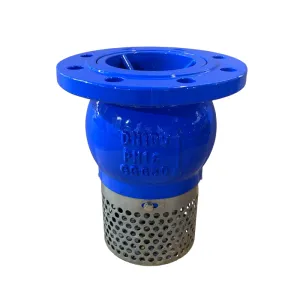
Foot valve
Category: Foot valveBrowse number: 124Number:Release time: 2026-08-10 21:31:00Pipe fittings are made of cast iron with spherical graphite. This makes it easier to lay trunk lines in crowded urban areas in large cities, and leads to smaller valve rooms, the size of which depends mainly on the space occupied by the fittings. It is usually used to connect pipes to water, other liquids or gases, with or without pressure, installed underground or above ground, it allows pipes to deviate, change direction or holes. -
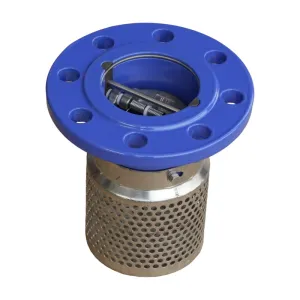
Double disc foot valve
Category: Foot valveBrowse number: 172Number:Release time: 2026-08-10 21:36:00Pipe fittings are made of cast iron with spherical graphite. This makes it easier to lay trunk lines in crowded urban areas in large cities, and leads to smaller valve rooms, the size of which depends mainly on the space occupied by the fittings. It is usually used to connect pipes to water, other liquids or gases, with or without pressure, installed underground or above ground, it allows pipes to deviate, change direction or holes.
News
Category:
No search results found!
Case
Category:
No search results found!
Video
Category:
No search results found!
Download
Category:
No search results found!
Job
Category:
No search results found!
Featured Products
No search results found!



 WhatsApp
 Phone
Phone