


 Español
 Portugues
 Pусский
 العربية
industrial pipe fittings
Industrial pipe fittings are essential components used to connect, control, change direction, and terminate piping systems in a wide range of industries. They are designed to ensure safe, efficient, and reliable transport of liquids, gases, steam, and other materials through pipelines. From water treatment plants and chemical processing facilities to oil and gas operations, power generation, and manufacturing systems, pipe fittings play a critical role in keeping industrial infrastructure running smoothly.These fittings come in many forms, including elbows, tees, reducers, couplings, unions, flanges, caps, plugs, and crosses. Each type serves a specific purpose. Elbows are used to change the direction of flow, commonly at 45 or 90 degrees. Tees allow the pipeline to split or combine flow. Reducers connect pipes of different diameters, helping to maintain proper flow and pressure. Caps and plugs are used to close the ends of pipes, while couplings and unions connect two sections of pipe securely. Flanges are especially useful in systems that require easy assembly, disassembly, or maintenance.Industrial pipe fittings are manufactured from various materials depending on the application and the environment. Common materials include carbon steel, stainless steel, alloy steel, cast iron, copper, brass, PVC, and other engineered plastics. Metal fittings are often preferred for high-pressure, high-temperature, and corrosive environments, while plastic fittings are widely used in lighter-duty systems and chemical handling applications. The selection of material depends on factors such as fluid type, operating temperature, pressure level, corrosion resistance, and long-term durability requirements.Quality and precision are extremely important in industrial pipe fittings. A properly designed fitting must provide a tight seal, withstand mechanical stress, and maintain performance under demanding conditions. Poor-quality fittings can lead to leaks, pressure loss, system downtime, and safety hazards. For this reason, industrial fittings are typically produced according to strict standards and undergo testing for strength, dimensional accuracy, and resistance to corrosion or fatigue.Modern industrial pipe fittings are also designed with efficiency and installation convenience in mind. Some are welded for permanent, high-strength connections, while others use threaded, socket-weld, or compression designs for easier assembly and maintenance. In large-scale industrial systems, the right fitting can improve flow efficiency, reduce energy loss, and extend the service life of the entire piping network.In summary, industrial pipe fittings are indispensable parts of any piping system. They provide the flexibility, strength, and reliability needed to move materials safely and effectively in demanding environments. Whether used in heavy industry, utility systems, or process facilities, these fittings support the performance and integrity of modern infrastructure.
Products
Category:
-
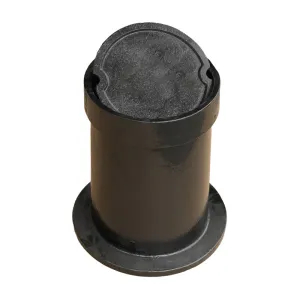
Cast Iron Cover
Category: Pipe FittingBrowse number: 131Number:Release time: 2026-08-25 19:14:43Water Meter Box is a durable protective enclosure designed to house and protect water meters, valves, and related fittings in underground or outdoor water supply systems. It provides convenient access for meter reading, inspection, maintenance, and replacement while protecting internal equipment from external damage.
News
Category:
No search results found!
Case
Category:
No search results found!
Video
Category:
No search results found!
Download
Category:
No search results found!
Job
Category:
No search results found!
Featured Products
No search results found!



 WhatsApp
 Phone
Phone