


 Español
 Portugues
 Pусский
 العربية
pipe flanging
Pipe flanging is a widely used metal-forming and joining process in piping systems, pressure vessels, and industrial equipment. It involves creating a flange at the end of a pipe or tube so that it can be connected securely to another pipe, valve, pump, or piece of machinery. A flange is a protruding rim or collar that provides a flat sealing surface and a convenient way to assemble and disassemble piping components. Because it supports both mechanical strength and reliable sealing, pipe flanging plays an important role in many industries, including oil and gas, chemical processing, power generation, shipbuilding, water treatment, and HVAC systems.The flanging process can be performed in several ways depending on the pipe material, size, wall thickness, and service requirements. In some cases, the end of the pipe is heated and mechanically shaped to form the flange. In other cases, cold-forming methods are used, especially for thin-walled pipes or ductile materials. The process may also be combined with welding, machining, or forming operations to achieve the required dimensions and surface finish. The flange must be accurately shaped because even small errors can affect alignment, sealing performance, and pressure resistance.One of the main advantages of pipe flanging is that it creates a strong and reusable joint. Unlike permanent welded connections, flanged joints can be dismantled for maintenance, inspection, cleaning, or replacement of parts. This makes them especially valuable in systems that require frequent service or future modifications. Flanged connections also make it easier to join different sections of piping that may need to be assembled on-site, where welding conditions are difficult or restricted.Pipe flanging must meet strict quality and safety standards. The flange surface should be smooth and even to ensure proper gasket contact. The bolt holes must be positioned accurately so that the flange can be tightened uniformly. If the flange is not formed correctly, leaks, stress concentration, or deformation may occur under operating pressure or temperature changes. For this reason, inspection and testing are often carried out after flanging to verify dimensions, roundness, thickness, and sealing capability.In practical applications, pipe flanging contributes to system reliability, easier installation, and long-term maintenance efficiency. It is a critical process that helps ensure that piping systems operate safely and effectively under demanding conditions. Whether used in large industrial pipelines or smaller equipment connections, pipe flanging remains an essential technique in modern engineering and fabrication.
Products
Category:
-
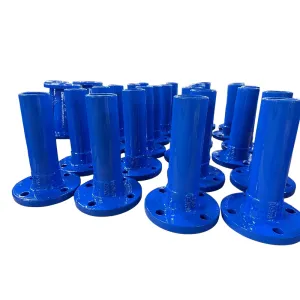
Single flange pipe
Category: Pipe FittingBrowse number: 144Number:Release time: 2026-08-07 19:39:01Pipe fittings are made of cast iron with spherical graphite. This makes it easier to lay trunk lines in crowded urban areas in large cities, and leads to smaller valve rooms, the size of which depends mainly on the space occupied by the fittings. It is usually used to connect pipes to water, other liquids or gases, with or without pressure, installed underground or above ground, it allows pipes to deviate, change direction or holes.
News
Category:
No search results found!
Case
Category:
No search results found!
Video
Category:
No search results found!
Download
Category:
No search results found!
Job
Category:
No search results found!
Featured Products
No search results found!



 WhatsApp
 Phone
Phone