


 Español
 Portugues
 Pусский
 العربية
reducing pressure valve
A reducing pressure valve is an essential device used in fluid control systems to maintain a stable and safe downstream pressure. Its main function is to lower a higher inlet pressure to a predetermined lower outlet pressure and keep that outlet pressure relatively constant, even when upstream pressure or flow demand changes. This makes it widely used in water supply systems, compressed air networks, steam lines, oil and gas pipelines, chemical processing plants, and many other industrial applications.The working principle of a reducing pressure valve is based on automatic regulation. When the inlet pressure is higher than the set outlet pressure, the valve restricts the flow passage to reduce pressure. If the downstream pressure rises above the preset value, the valve closes slightly to bring it back to the desired level. If the downstream pressure drops because of increased demand, the valve opens more to allow greater flow. This continuous adjustment helps protect equipment, improve system stability, and ensure efficient operation.A typical reducing pressure valve is composed of several key parts, including the valve body, valve seat, disc or plug, spring, diaphragm or piston, and adjustment mechanism. The valve body is usually made from durable materials such as brass, stainless steel, cast iron, or bronze, depending on the working medium and pressure conditions. The diaphragm or piston senses outlet pressure and transmits force to the valve element. The spring provides the reference force that determines the desired reduced pressure. By turning the adjustment screw or knob, the user can change the spring compression and set the required outlet pressure.Reducing pressure valves offer many advantages in industrial and commercial systems. First, they help prevent damage to pipelines, fittings, pumps, and appliances caused by excessive pressure. Second, they improve safety by reducing the risk of leakage, bursts, and equipment failure. Third, they enhance energy efficiency because the system does not need to operate at unnecessarily high pressure. Fourth, they provide more consistent performance for end-use equipment, which is especially important in processes requiring precise pressure control.These valves are available in different designs to suit various applications. Direct-acting models are compact and simple, making them suitable for smaller flow rates and general-purpose use. Pilot-operated models are better for larger systems because they can handle higher flow capacity and provide more accurate pressure control. Depending on the medium, the valve may be designed for water, air, steam, gas, or corrosive liquids. Some versions include filters, gauges, bypass lines, or safety accessories to improve performance and maintenance.Proper installation and maintenance are important for reliable operation. The valve should be installed in the correct flow direction, and the system should be checked for cleanliness before commissioning. Periodic inspection of the diaphragm, spring, seals, and seat is recommended to ensure stable pressure control and to prevent wear-related problems. If the valve becomes clogged, damaged, or improperly adjusted, outlet pressure may fluctuate or fail to meet the required setting.In conclusion, a reducing pressure valve is a vital pressure control component that protects equipment, stabilizes operating conditions, and improves overall system reliability. Its simple yet effective automatic regulation makes it indispensable in both industrial and residential applications.
Products
Category:
Control valve
-
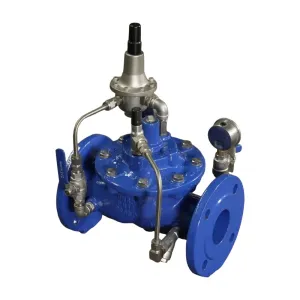
Pressure reducing valve
Category: Control valveBrowse number: 139Number:Release time: 2026-08-25 19:02:54Control Valve is a diaphragm-operated automatic control valve designed for reliable regulation and control of water flow and pressure in piping systems. It uses hydraulic pressure to operate the main valve, eliminating the need for an external power source. -
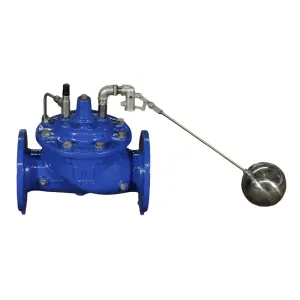
float valve
Category: Control valveBrowse number: 179Number:Release time: 2026-08-25 19:08:59Control Valve is a diaphragm-operated automatic control valve designed for reliable regulation and control of water flow and pressure in piping systems. It uses hydraulic pressure to operate the main valve, eliminating the need for an external power source.
News
Category:
No search results found!
Case
Category:
No search results found!
Video
Category:
No search results found!
Download
Category:
No search results found!
Job
Category:
No search results found!
Featured Products
No search results found!



 WhatsApp
 Phone
Phone